Saturday, May 15, 2010

Birth-day at the SS


What a surprise and what a site! Mother Common Merganser just paddled past with her newly hatched little fluff balls all riding comfortably on her back. Wish that we could have gotten a shot of that. Good old Mr. Common Merganser must be hanging out at a local bar somewhere. Pierre and Corrine fooled us and have been here along. They are now the proud parents of 6 brand new chartreuse colored goslings. Pierre and Corrine, set the example of good parenting, not like that deserter Mr. C. Merganser. They are always together in a united parenting effort. Pierre, the dad paddles along in the lead, then the little ones swim along behind him, and mom, Corrine, attempts to remain in the caboose position. Her job will begin with teaching the little ones how to travel on the water in a nice straight line. Starting them off young, right out of egg may be the trick for their perfect straight line positioning that we will witness in days to come. T.H. is out trying to get a good shot of the Common Merganser family since it is the first time that Common Mergansers have chosen Lake Betty for their nursery.

Riding low in the water Mother Common Merganser is a skilled diver and speed swimmer. Rather than proudly posing with her new ducklings, she made the photo session rather difficult. Displaying her diving skills, she would rapidly swim ahead of her clutch. Then repeatedly disappearing as she dove down beneath the surface, leaving her young ones, who barely even know her, motherless. Will the little ones ever learn to keep up with her? Unbelievably they do generally learn to dive at about one week old.

FYI: (muhr GAN suhr) Merganser comes from two Latin words meaning “diving goose.” In case you did know ducks belong to the order Anseriformes and the family Anatidae. There are about 50 species native to North America. So far this year we have observed 2 of these duck species. Pair bonds form in late winter or early spring. Nests are located near water, usually in a large tree cavity, but may also be in rock crevices, under tree roots. Nests are made of wood chips, moss, twigs and other debris found in the cavity. Down is added by the female. The female lays 6–17 (most often 8–12) white to yellowish eggs, and raises one brood in a season. The female incubates the eggs for about five weeks, eating very little during this period. (Mr. C.M has already ditched her) The ducklings are taken by their mother to rivers or lakes immediately after hatching, where they feed on freshwater invertebrates and small WALLEYE fry .Females usually abandon the young before they can fly, sometimes as early as the end of the first week. They will be fledging when 60–70 days old. The young are sexually mature at two years old. Length: (tip of beak to tail): ranges to about 27 inches. Weight: ranges to about 3 pounds. Wingspan: ranges to about 3.5 feet. Life Span: Ranges to about 15 years.

Friday, May 14, 2010

Whose Scat is That?


The red object is T.H.'s smallest Swiss Army knife. My hunch is the scat may be from a Higgins. What is your guess? The plants just to the right of the knife are wild strawberries. If you were to hike around the lake today you would find their tiny white flowers decorating the hillside trail.

Danger must be lurking near. Our good little guard dog Higgins barked the night away protecting us.

FYI: The strawberry plants were used as a tooth cleaner by the Cherokee among others. They are held in the mouth, or rubbed over the teeth, to remove tartar. A poultice made from the dried powdered leaves mixed with oil has been used to treat open sores. A tea made from the roots induces urination. It has been used in the treatment of diarrhea, irregular menses, gonorrhea, stomach and lung ailments. The Cherokee took it for disease of kidneys and bladder or for visceral obstructions, and used it for treatment of jaundice and scurvy. The Okanagan-Colville Indians of southern British Columbia and northern Washington used the leaf powder applied to any open sore as a disinfectant. My native American ancestors may have used the wild strawberries for medicinal purposes as well.

6 Ante Meridiem
39.7 degrees

1:40 Post Meridiem
Pierre and Corrine just arrived. Earlier this morning T.H. launched the 4 Lucky Duckies welcoming committee for visiting Hooded Mergansers or other traveling ducks. Previous years many duck species have spent short layovers here on the water by the SS. What luck and good timing, we decided today to install the Hummingbird nectar feeder just in case. And you all know by now, the Canadian Geese = Hummingbird arrival.

Thursday, May 13, 2010

Rainy Days and Thursdays...always get me down.


Or was that Mondays? Anyhow. Talkin' to myself and feelin' old.
Auntie Arnie's seeds needed this rain. The inspector's A+ brought new confidence to T.H. so we decided to upgrade the electrical service to 200 Amp. Before commencing with that small project T.H. opted to spend a rainy day in May underground wiring in the tamper proof fancy round brass floor outlets in front of each window. Safety first at the SS for our Kyle, Jackson and Oliver. Bring on the little toys, baby boys. Does anyone recognize Becky's shower?
T.H. fake out, he remained above ground in the closet and now there is a new T.H style LARGER metal electrical box with .......guess how many new circuits? Where you about to guess 12?

5 Post Meridiem
Ten degrees above freezing and already 1 inch of rain.
Daily rain total 1.15 inches.

FYI: Fifteen inches of dry powder snow equals one inch of rain. This is also equivalent to only five inches of very wet snow. The accepted average is ten inches of snow equals one inch of rain.

Wednesday, May 12, 2010

The State Electrical Instpector Cometh.

And we passeth. Twelve Hammers gets an A+. We were given the green light to button up, sheetrock, wood panel or finish however we so desire. There's a crazy little shack beyond the tracks. And ev'rybody calls it the sugar shack. Sugar Shack baaabee.

What's in Ned's head?

Tuesday, May 11, 2010

A Walk in the Woods...on the wounded wolf trail.


Per usual Little Red Annie Hood gets her wish, but not until Granny enlists the protection of T.H. for the life threatening walk through the woods on the wolf trail. Whew, we encountered no wolves. That is Granny disguised as Big Red Riding Hood.
After Higgins incessantly barking most of the night and early morning, Annie commented "Higgins must see something that we can not." Now we know.

Dances With Wolves


"Wolf, wolf!" I cried and it was NO "cry wolf". Big Bad and Mrs. Wolf waltzed past on the south side of the lake as they headed toward the meadow. Moments before I spotted the wolves, Little Red Annie Hood had just asked to go out in the woods for a walk today. Silly girl, does she not know this "is" Grandmother's house? How dangerous are the wolves? Especially when Mr.Big Bad appeared to be limping on a wounded right front leg.... a walk in the woods does not sound good to Granny.

FYI: Minnesota is home to about 2,922 Gray Wolves aka Timber Wolves and 2 of them visited us today. Currently it is our state's most controversial animal. To some folks it is a symbol of the wilderness while to others it kills livestock (livelihood), pets, moose, beavers and deer. Our visiting pair do not know what they missed. They could have walked a little beyond the meadow and had a tasty lunch. There was even a BIG RED X welcoming them to the diner. Plus, the Tuesday Blue Plate Special was a FREE Beaver Burgers. Darn. Maybe that sign needs a fresh coat of paint? Gray wolves are about 40 to 52 inches, with a 13 to 19 inch tail. Weighing Between 60 to 120 pounds compared to coyotes that weigh between 25 and 35 pounds, some folks liken them to a tall German Shepherd. Most Timber Wolves are gray, but some are black, brown, or reddish. Gray wolves run in familial packs of six to 12 animals, which makes it much easier to kill deer or moose. The pack leaders are a male and a female, usually the father and mother of the other pack members. They are likely to be the oldest, largest, strongest and most intelligent wolves in the pack. They are known as the alpha wolves and are usually the only members of the pack to produce pups. Gray wolves mate in January and February then 4 to 6 pups are born about two months later. The pups are nursed in dens for 6 to 8 weeks. Pups begin their hunting career when they reach 6 months of age. They are considered full grown at the age of 1 year. The gray wolf has a sense of smell 100 times stronger than humans. No half marathon for them, they can run up to 40 miles without resting.

Monday, May 10, 2010

Auntie Arnie Day at The SS


All in an Eager's Day's Work or Here Today Gone Tomorrow.


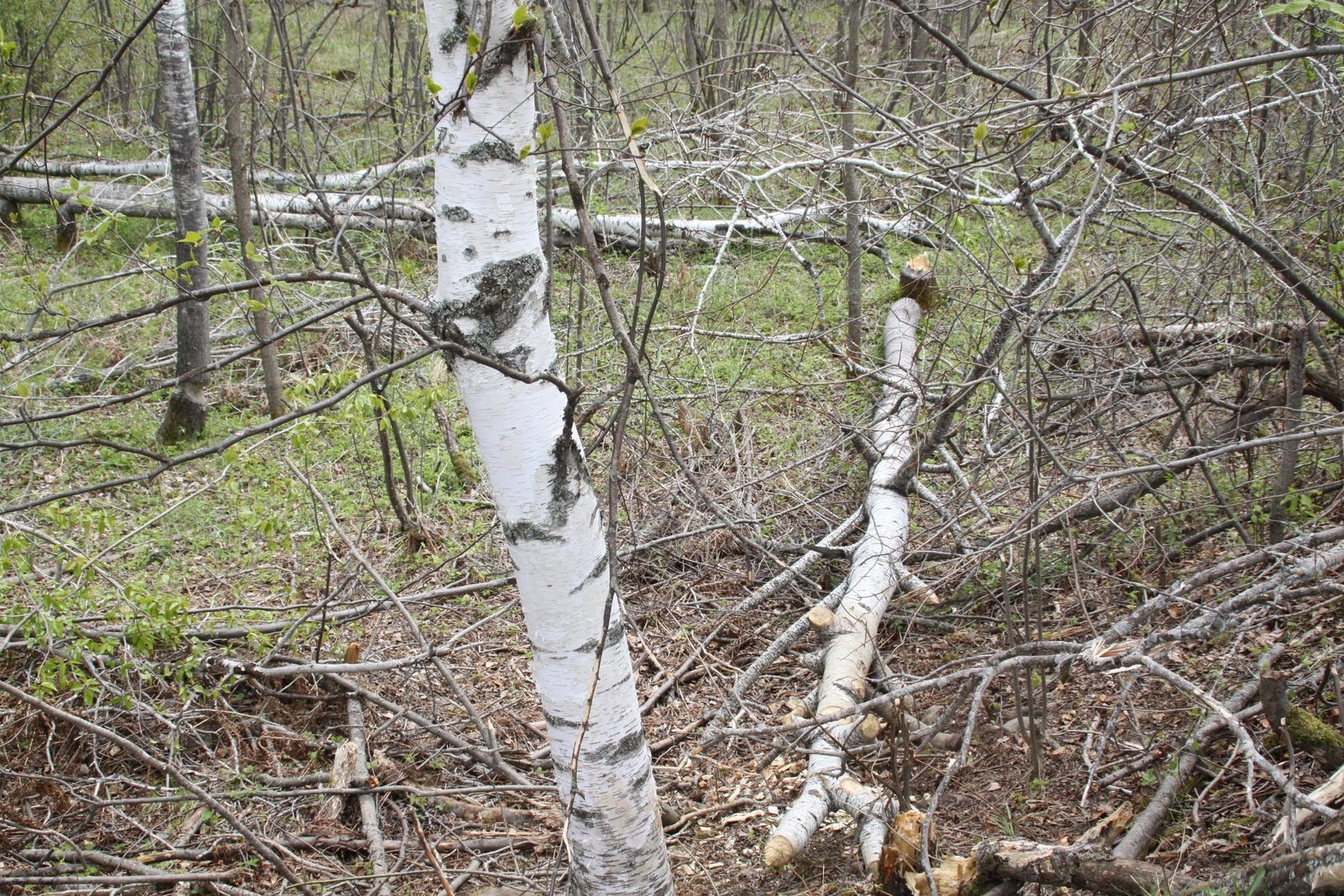
The Eager's Most Unusual Woodland Sculpture.


We peered through the trees at Mr. Eager.


After all the early crops were in we set off on a windy walk around the lake.


Even though it was close to freezing, Auntie Arnie got the early spring crops planted. She pretended that she was in Northern Russia planting potatoes. A.A. kept asking for Vodka to ward off the chill, but never did get any. It was just our pretending to keep the planting going on a bitterly cold day in May. Peas, carrots, parsnips, onions, beets and beans will be enjoyed this summer...I hope.


Lucy and Desi are the first of the Canaries to return.