Wednesday, December 9, 2020

Look Who's Cooking Now


Last night was the first time that I was allowed to cook. I told Peter that I always like to cook with wine. Sometimes I put in the food! The Taittinger was delivered right to my hand. I made the decision to spare the salmon from the champagne.

Tuesday, December 8, 2020

Bah Humbug in Hamburg


After returning from a nice afternoon walk to Langenhorn Market and back, an idea flashed. Trying to shake off a little of the Bah Humbug I suggested that we decorate the two trees in the front garden. Mission accomplished just before darkness took over. Those trees really could use a little more bedazzle.


Then there is my favorite Grinch inspired Chrismas Tree. Worth stealing wouldn't you agree?


Monday, December 7, 2020

Skating in the Dark


A before breakfast skate. 

These Covid School Lockdown kids seem to have no problem fulfilling any gym class exercise requirements.


Looks really, really dark. Betsy says that they will pop in for breakfast (hopefully a hot one) and then head back out for another skating session before school.


A Sewer Fit for an Emperor


Moving on as our magical history tour continues.


Ironwork on the building's door.

Why would an emperor want to take a boat trip through the underground sewers of Hamburg? There is a "not sure that I believe it story" here about the origin of this tiny Art Nouveau building.

 It is a fact that after Hamburg's great fire of 1842 William Lindley, a brilliant British engineer, designed a completely revolutionary brick-vaulted underground sewage system for Hamburg. This was the first underground sewage system in continental Europe. A really big deal. Big enough that "they say" Emperor Wilhelm II planned to visit this new wonder down under and travel through it by boat! Another surprising accomplishment of the new sewage system was the purity of air. Of course, the Kaiser must have a befitting entrance to the sewage system so this small building was built just for that purpose.


The Speicherstadt (storage city) of Hamburg is the world's largest contiguous warehouse district. Hamburg harbor is the third-largest in Europe and since the middle ages goods from every corner of the world have been shipped there. These 8 story high warehouse buildings were used to store top-quality imported goods from around the world like coffee, tea, rum, cocoa, spices, Persian carpets, rubber, and tobacco.  In 1887 the most important coffee exchange in the world was located there.

From the end of the 19th century and the beginning of the 20th century, the Speicherstadt enjoyed a duty-free status. The free economic zone of Speicherstadt ended in 2013. Peter added, prior to 2013 when crossing in and out of this tax free zone folks were stopped and checked. Smuggling cigarettes and such purchased from sailors may have been one reason for cars being searched as they exited the zone.


Looking down the canals of the Speicherstadt, the neo-Gothic red-brick warehouses with their turrets, gables, arches, and decorative wrought iron railings appear to go on forever.
Hamburg boasts more bridges than any other city in the world. They claim to have more bridges than Amsterdam, Venice, and London combined. Today this district is a major tourist attraction with restaurants, cafes, museums, and Miniature Wonderland. You guessed it - everything is closed for the German Covid lockdown.


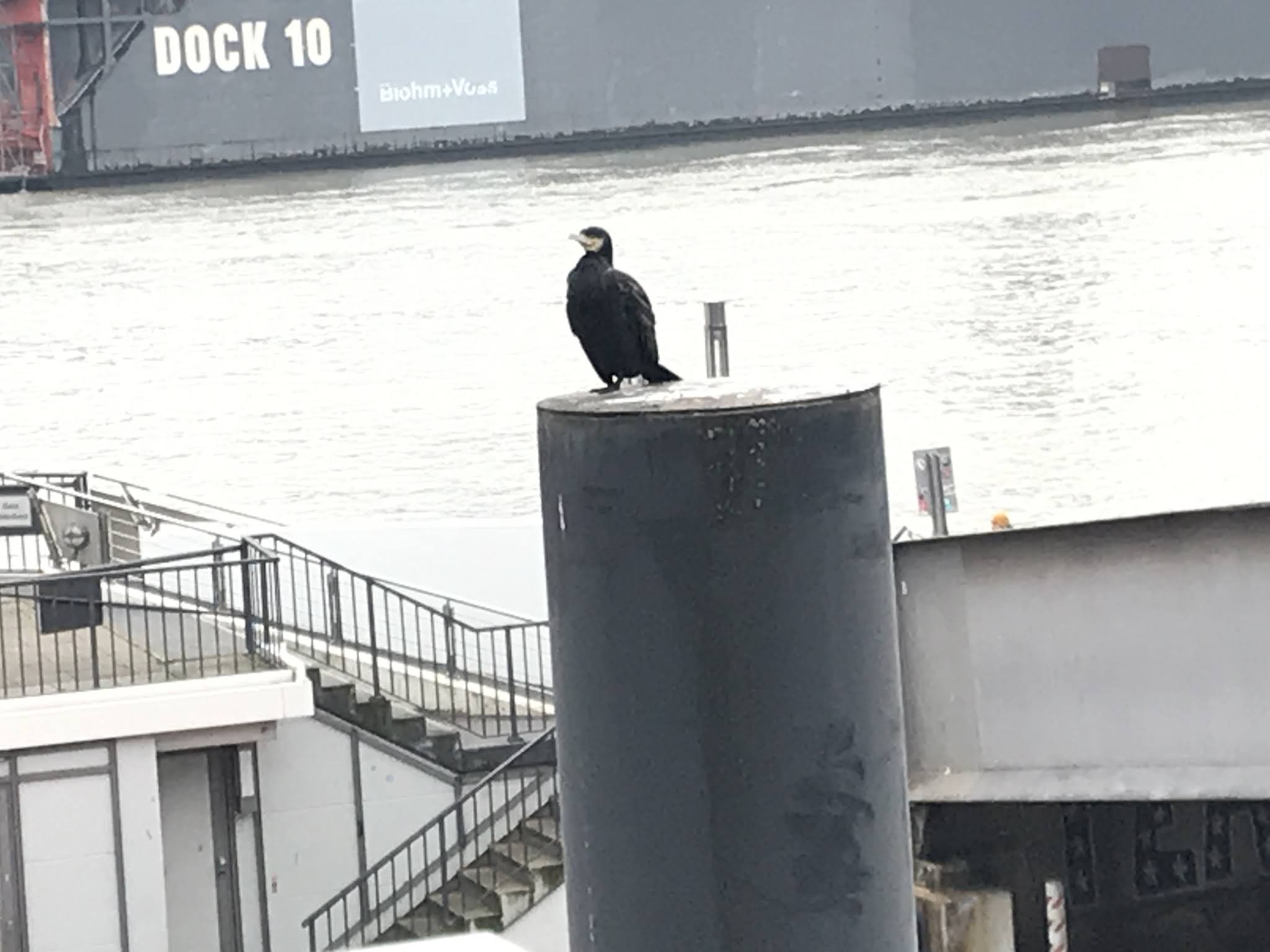
Not just a cloudy Sunday architectural tour today but a bird spotting one as well. Quite possibly this is my first encounter with a Great Cormorant. At any rate,  if I  ever crossed their paths or perches before, I failed to take notice of them. These are the same expert diving birds that Chinese fishermen have tamed and trained to catch fish. I believe that this type of fishing is done at night with lanterns to attract the fish. A string is tied around the bird's neck so the bird does not swallow the fish but brings it back up to the fisherman. If not for Covid lockdown we may very well have been viewing the Great Commorants in China.


Today's vending machine discovery is in the Portuguese district. This one dispenses cash!

Saturday, December 5, 2020

Cookies and Skating on Thin Ice


Katherine the ice tester with her new auger. So, how thick is the Lake Betty ice?


There goes Mr. Kyle skating on thin ice. Artic Annie the Brave is usually the first one in the lake each year. If not very careful Mr. Kyle will take the title of being the last one in.


Let the hockey season begin. Hopefully very close to shore please.


Christmas cookie baking with Katherine.


Fresh from the oven. Even some vanillekipferilles

Friday, December 4, 2020

Lubeck Gothic Marzipan Capital of the World


Today Lubek Old Town is a UNESCO World Heritage site, a protected city that dates back to the 10th century. It was the main Hansa city among 230 cities connected to the Hanseatic trades. In the 14th century, Lubeck was the largest and most powerful member of the medieval trade organization, the Hanseatic League, an alliance formed for the protection of trading interests. The city was founded in 1143 by Count Adolf II of Holstein and was the first port on the Baltic Sea.


Hello, Gingerbread Town.
Arriving at the picture-perfect medieval town of Lubeck we are welcomed by the mighty red brick 15th century Holsten Gate with cylindrical towers and arched entrance.   
 
 It is known as the City of Seven Spires.  Two of them are Lubecker Dom (the city cathedral) and Marienkirche (St. Mary's). Both are the oldest German brick Gothic-style buildings dating back to the 13th and 14th centuries.


Mariennkirche the third largest church in Germany was another casualty of war. An allied air raid on March 28th and 29th in 1942  almost completely demolished the church. The Lubeck Cathedral also suffered the same fate. Reconstruction began in 1947 bringing it back today close to its original form. This is one of the many buildings that we did not visit but will return to in the next few weeks. There is just too much history for one afternoon.


Walking along the narrow streets there are many architectural highlights to admire. Several buildings have crow-stepped gable facades similar to classic Dutch.


Peeking into alleyways. Hidden inside are romantic cobbled courtyards.


Window shopping at bakeries. Calorie-free!


Much like Fredrikstadt, Christmas trees line the streets. These trees however look a little naked. Wonder if they will be decorated for our return?


Could that be O Tannenbaum that I hear? Through a muffled mask?


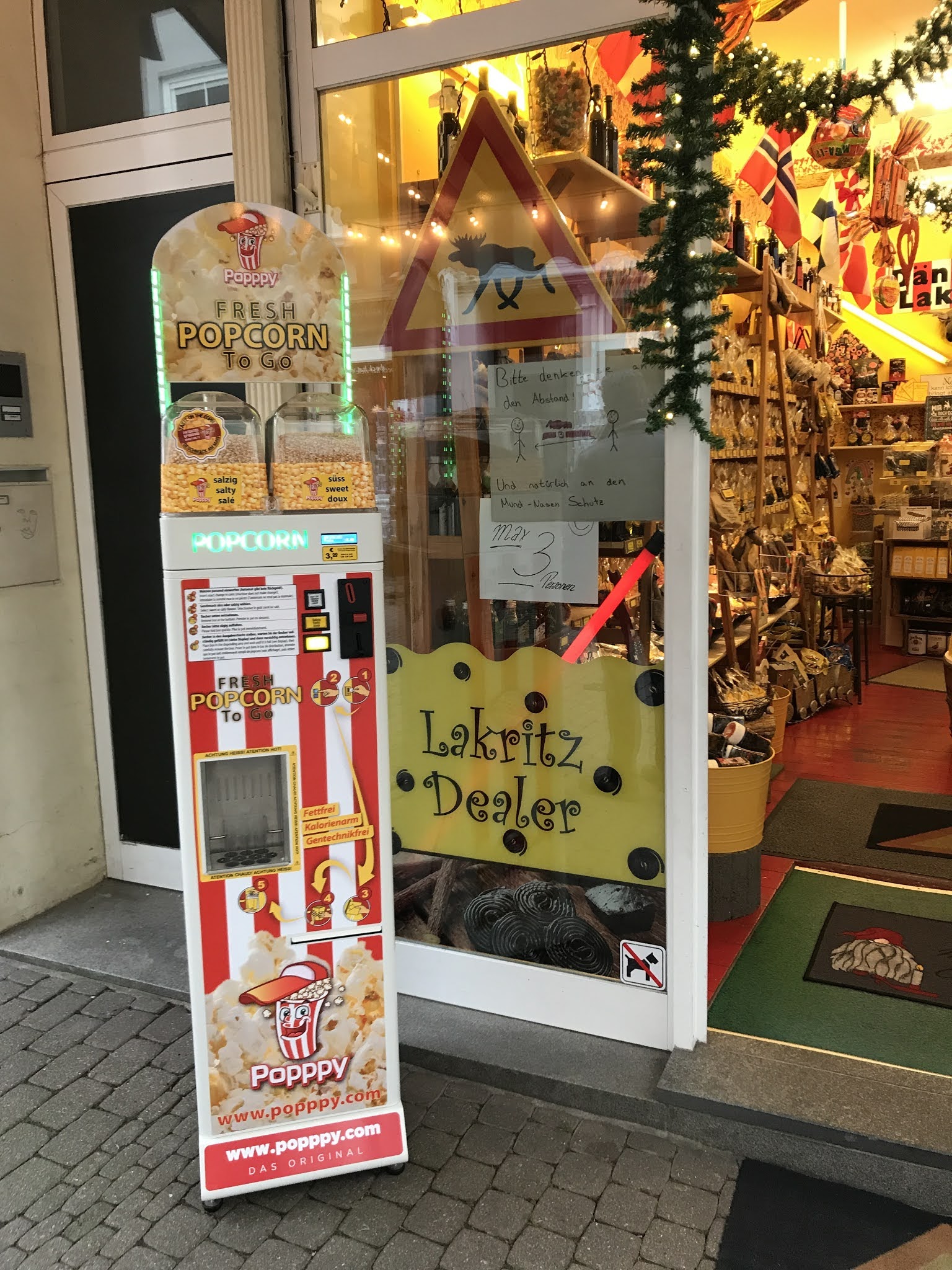
Oh, Happy Day! A popcorn vending machine before my eyes.

So far I have never enjoyed any popcorn in Germany. I have surely eaten a lifetime amount of it back in 
the US of A. Will Bubbie make it back to the machine by 3 o'clock. Silly me, why wait? It must be 3 o'clock somewhere. This week we have seen cigarette vending machines on city streets. In the countryside, we have passed vending machines for potatoes and then one for eggs. No pictures of those yet.  Please believe me though, that is for real. No yolk.


Lubeck the Marzipan Capital of the World.

Within the walls of this world-famous shop, you will find everything marzipan, more than you might have thought existed. The Niederegger shop is believed to date back to the 12th century.
The upstairs cafe and museum were off-limits due to the lockdown but marzipan lovers were not denied filling their shopping baskets with any kind of sweet marzipan treat.


Peter filled "his" basket so we carried home a variety including a baked potato that is really all marzipan. Ready for a sweet-toothed German Christmas! And, for my Duolingo buds - get this: Marzipankartoffeln are the classic German Christmas sweet. 


He could have chosen fruit but we both are potato lovers. Alright, say it, sometimes we are couch potatoes. 


We didn't bring a famous pig back with us but after eating all of that marzipan,  no ho ho-ing, rather an oink, oink, oink-ing all the way home. In Germany, these are good luck pigs. I'm telling you, with all of the sweets I will need good luck not feeling like a pig.


Local Lubeck lore: It is said the origin of marzipan was during the 15th-century famine. Flour was scarce and the senate of Lubeck ordered bakers to find a replacement. We have those resourceful bakers of the time to thank for their brilliant substitute which was the birth of marzipan. No flour for those fellas - they only needed sugar, eggs, and the use of almonds.


When you enlarge this map by clicking on it you will find Lubeck is north and east of the tiny state of Hamburg. There are many historical cities to explore and learn about in Schleswig-Holstein. (the only other state that we are allowed to visit) Truly a great learning experience and the silver lining of the Covid lockdown. Otherwise, we would be off to other far-away places and missing all that Germany holds.

Wednesday, December 2, 2020

Angeln Verboten


Fishing is forbidden in Raakmoor Lake. Rather reassuring knowing that folks must find better waters for supplying their fish dinners.


Angeln Verboten

One of the few German signs that I can interpret.


Dull gray skied days all week and the daylight hours are much too short. The sun sets at 4:03PM so a good idea to get out of the woods soon. We have to wait until 8:18AM tomorrow morning for sunrise but that will not even bring a glimpse of the long-lost sun. The forecast for the rest of the week is clouds, clouds, and more clouds.


Today's happy face breakfast.


Lubeck is our planned destination for tomorrow's drive.